
Children should visit a pediatric dentist by their first birthday or within six months of their first tooth erupting, whichever comes first. Most parents wait until age 2 or 3, but baby teeth are vulnerable to decay from the moment they appear — making early intervention essential for lifelong oral health.
At Pine Tree Pediatric Dentistry, Dr. Tesha Waggoner and our team welcome patients as early as six months after the first tooth appears. As parents themselves, they understand the importance of establishing a dental home early and have built an environment where children feel safe and comfortable from their very first visit.
When to Schedule Your Child’s First Dental Visit
The timing of your child’s first dental visit is one of the most important early health decisions a parent makes. The American Academy of Pediatric Dentistry (AAPD) recommends establishing a dental home by age 12 months — earlier if teeth arrive before then.
What Age Should a Baby First See a Dentist?
A baby should first see a pediatric dentist by age 1 or within six months of the first tooth erupting, whichever milestone arrives first. Baby teeth typically begin emerging around 6 months, which means most children’s first dental visit falls near their first birthday. Scheduling early allows us to assess tooth development, identify decay risk, and educate parents on proper home care before problems develop.
Is Age 1 Too Early for a Dental Visit?
No, age 1 is not too early for a dental visit. It is the recommended age established by every major dental and pediatric medical organization in the United States. Baby teeth are susceptible to decay from the moment they erupt. The enamel of primary teeth is thinner than permanent teeth, making acid erosion faster and more damaging. Waiting until age 2 or 3 means early decay can go undetected during the period when it is most easily prevented.
What Happens if You Wait Until Age 2 or 3?
Children who first see a dentist at age 2 or 3 face a measurably higher risk of requiring restorative treatment rather than preventive care. Approximately 23% of children ages 2 to 5 in the United States have dental caries in their primary teeth, according to the 2011–2016 National Health and Nutrition Examination Survey. Research from the AAPD’s State of Little Teeth report found that nearly 1 in 5 children under age 5 had experienced dental caries as of 2015–2016.
What Happens at a Child’s First Dental Appointment?
A child’s first dental appointment is designed to be gentle, brief, parent-centered, and focused on education and comfort rather than extensive treatment. At Pine Tree Pediatric Dentistry, first visits typically last 30 to 45 minutes and follow a consistent, reassuring structure.
What Does a Pediatric Dentist Check at Age 1?
At a child’s first dental visit, a pediatric dentist examines the following areas to assess oral development and identify risk factors early:
- Existing teeth for signs of early decay or enamel defects
- Gum tissue for inflammation or abnormal development
- Jaw alignment and bite development
- Soft tissues of the mouth, including lips and tongue
- Tongue and lip tie presence, which can affect feeding and speech
- Oral habits such as thumb sucking or pacifier use
Parents receive personalized guidance on brushing technique, fluoride use, feeding habits, and what to expect as more teeth erupt.
How Long Does a Baby’s First Dental Visit Take?
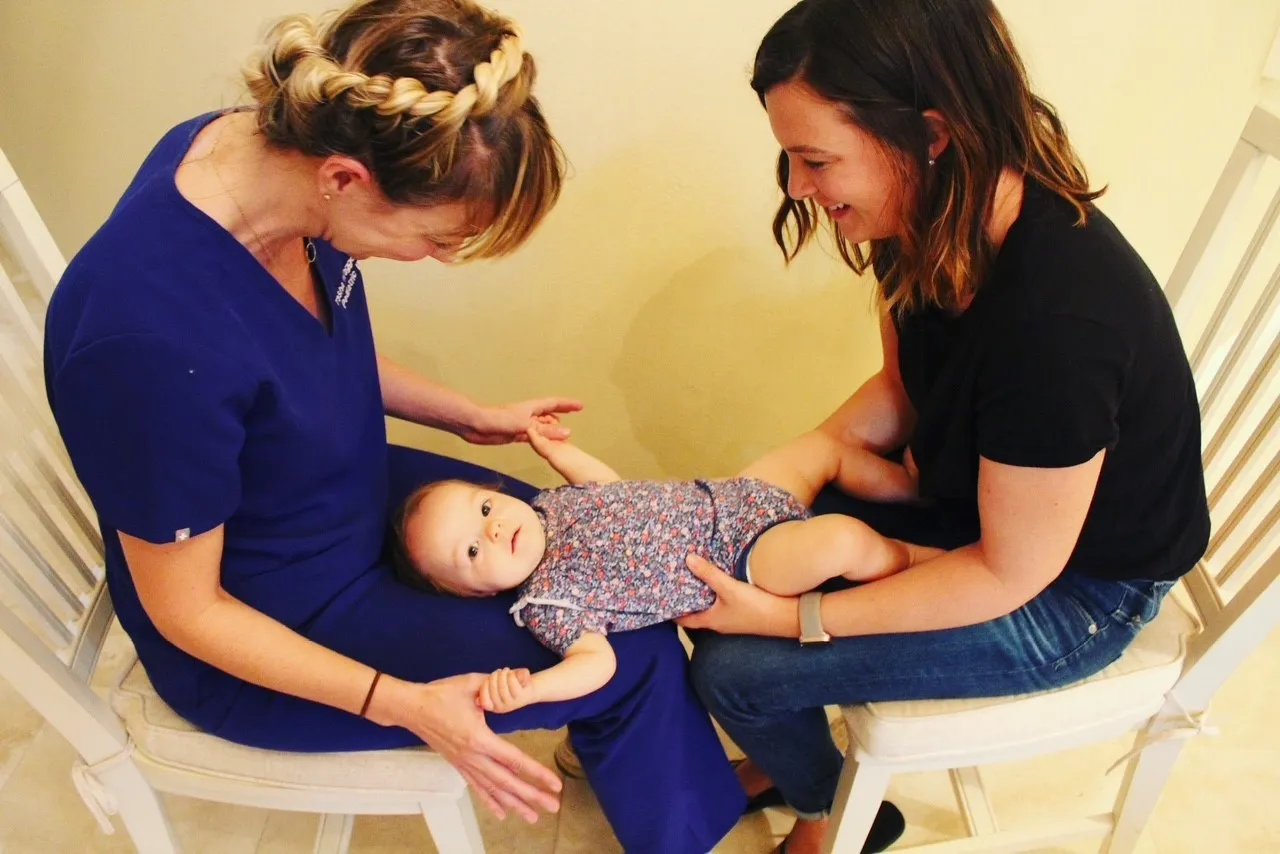
A baby’s first dental visit typically takes 30 to 45 minutes. The majority of the appointment involves our team speaking with parents about home care, nutrition, and oral development milestones. The clinical examination is brief and gentle, often conducted in a knee-to-knee position where the parent holds the child in their lap during the exam to provide comfort and security.
What Is a Knee-to-Knee Exam?
A knee-to-knee exam is a positioning technique used during infant and toddler dental visits in which the parent and dentist sit facing each other with knees touching, and the child lies across both laps. This method keeps the child secure and close to the parent while giving us full access to examine the mouth. The exam also allows us to check for tongue and lip ties that can affect feeding and speech development. At Pine Tree Pediatric Dentistry, our office dog Meyers is often present during visits to help nervous children feel calm and at ease.
Dental Care by Age: What to Expect at Each Stage
Dental care needs evolve with each stage of childhood, and the following age groups represent the key milestones in your child’s oral development. Understanding what your pediatric dentist will focus on at each stage helps parents prepare their children for successful, positive visits.
Infants and Toddlers (Birth to Age 2)
For babies with their first few teeth, dental visits focus primarily on parent education and establishing healthy habits before problems develop. We review proper brushing technique for small teeth, safe cleaning methods for gum tissue before teeth erupt, and the importance of transitioning from bottles to cups by age 12 months to prevent baby bottle tooth decay. These early visits are brief and gentle, introducing children to the dental chair and basic examination tools in a low-pressure setting.
Preschool Age (Ages 3 to 5)
Children between ages 3 and 5 typically receive more comprehensive exams, professional cleanings, and dental X-rays when tooth spacing or decay risk warrants evaluation. At this stage, children can follow simple instructions and begin understanding why oral health matters. Pediatric dentists may introduce preventive treatments such as fluoride varnish and discuss dental sealants for permanent molars as they emerge around age 6.
School Age (Ages 6 to 12)
As permanent teeth replace baby teeth, pediatric dentists monitor spacing, bite development, and alignment. Dental caries is five times more common than asthma, the second most prevalent chronic childhood disease in the United States, making ongoing preventive care critical during these years. Dentists can identify when early orthodontic intervention is indicated and provide referrals at the appropriate time. Dental sealants placed on permanent molars during this window reduce cavity risk.
Why Early Dental Visits Matter for Baby Teeth
Primary teeth serve essential functions beyond appearance. They guide the eruption and positioning of permanent teeth, support speech development, and enable proper nutrition during the years when children’s brains and bodies are developing most rapidly. Losing a baby tooth too early due to untreated decay allows surrounding teeth to drift into the empty space, increasing the likelihood of crowding, misalignment, and orthodontic treatment later.
Can Baby Teeth Really Get Cavities?
Yes, baby teeth can get cavities and are, in fact, more vulnerable to decay than permanent teeth. Primary tooth enamel is thinner than adult enamel, which means acid from bacteria erodes it faster. Cavity-causing bacteria can transfer from parent to infant through shared utensils or pacifiers, meaning a child can have an active decay risk before their first tooth even appears. Early childhood caries is the most common chronic infectious disease of childhood in the United States, more prevalent than asthma, obesity, and diabetes combined.
How Does Early Childhood Caries Affect Permanent Teeth?
Untreated decay in baby teeth directly threatens the development of permanent teeth. When a baby tooth becomes severely infected and the pulp dies, the resulting abscess can damage the permanent tooth developing beneath it. Early tooth loss from decay also causes neighboring teeth to drift, leaving insufficient space for permanent teeth to erupt in proper alignment. Children affected by early childhood caries are significantly more likely to experience decay in their permanent teeth as well.
Do Baby Teeth Need to Be Filled?
Yes, decayed baby teeth need to be filled because they serve as space holders for permanent teeth and support speech, chewing, and jaw development for years before they naturally fall out. A 4-year-old with eight untreated cavities would require two to four hour-long appointments to complete all restorations under standard conditions, which would be a difficult experience for any child. Detecting and treating decay early, when cavities are small, keeps appointments brief and avoids the need for more complex interventions such as pulp therapy, extractions, or sedation.
Schedule Your Child’s First Visit at Pine Tree Pediatric Dentistry
Every child deserves a positive foundation for their dental health. Dr. Waggoner and our team tailor each visit to the individual child’s comfort level, offering tools such as weighted blankets, low lighting, and the option to watch movies during treatment. For children with dental anxiety or special needs, the team provides additional time and specialized support to ensure a successful experience.
Dr. Waggoner completed her pediatric specialty training at Oregon Health & Science University in 2018 and maintains active membership in the American Academy of Pediatric Dentistry. Ready to give your child the best start for a lifetime of healthy smiles? Contact Pine Tree Pediatric Dentistry to schedule an appointment at our Beaverton office.