

When your child’s thumb-sucking habit lingers past toddlerhood, finding the right solution can feel overwhelming. You may have come across thumb guards while searching for answers, those finger-worn devices designed to make thumb sucking uncomfortable or impossible. While they seem like a practical fix, this approach can create new challenges for children, including skin irritation, difficulty with daily tasks, and emotional distress from feeling punished rather than supported. There are gentler, more effective paths forward.
At Pine Tree Pediatric Dentistry in Beaverton, Oregon, we take a child-centered approach to habit intervention. Rather than reaching for thumb guards, our team works with families to find solutions that fit each child’s unique needs. If you’ve been wondering what those better options look like, you’ll find our approach to habit appliances and supportive therapies thoughtful, compassionate, and grounded in the latest pediatric dental guidance.
Why Thumb Guards Fall Short
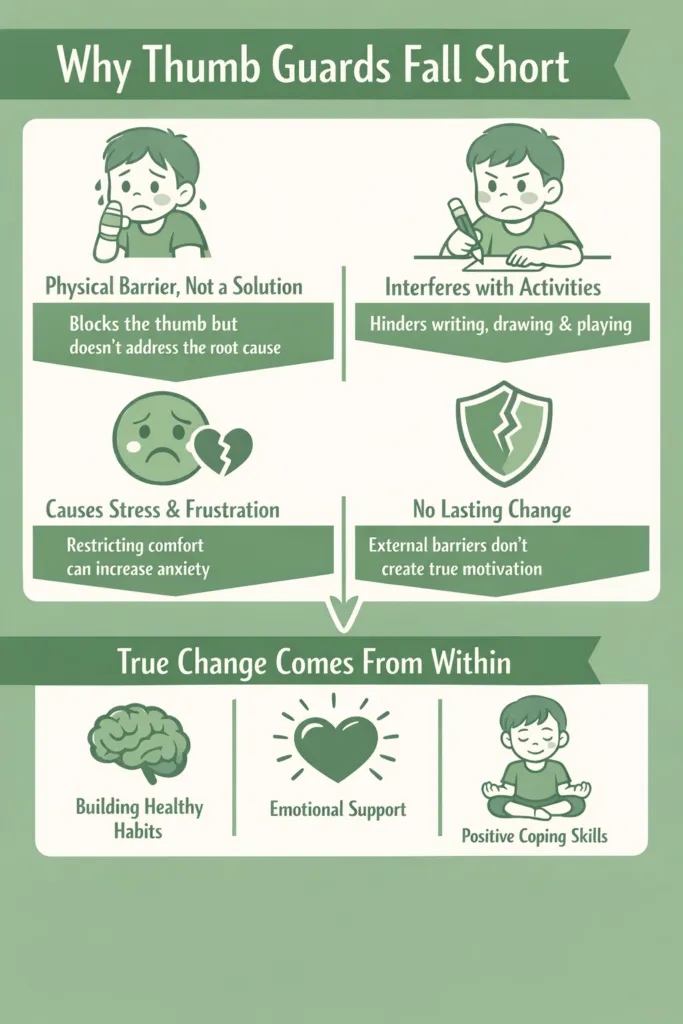
Thumb guards work by blocking thumb access to the mouth, creating a physical barrier meant to interrupt the habit. The problem is this barrier-based approach relies on making the habit uncomfortable rather than helping a child develop new coping strategies or oral muscle patterns. For many children, especially those who suck their thumbs for comfort or out of anxiety, having their thumbs restricted can feel distressing and counterproductive.
There’s also the practical concern of prolonged use. Thumb guards can interfere with fine motor activities like writing, drawing, and playing. Children may become frustrated or resistant, turning what should be a supportive process into a source of conflict. If a child doesn’t genuinely want to stop the habit, external barriers like thumb guards are unlikely to produce lasting results. At our practice, lasting change comes from within, and that’s exactly what our preferred alternatives are designed to encourage.
What We Recommend Instead
We don’t use thumb guards because we believe children deserve respectful, positive approaches. The alternatives we recommend work with a child’s development rather than against it.
The Bluegrass Appliance
For children who need a dental appliance to help break the thumb-sucking habit, we use the Bluegrass appliance. This fixed appliance sits inside the mouth and features a small roller that redirects the tongue and discourages digit placement. Unlike punitive appliances with sharp points, the Bluegrass appliance is comfortable, non-aversive, and child-friendly. Research published by the National Institutes of Health confirms that appliance-based approaches, when used alongside behavioral support, are among the most effective interventions for persistent thumb sucking. Our team carefully evaluates whether an appliance is appropriate and ensures the child is a willing participant in the process.
Here’s a quick look at how the Bluegrass appliance compares to other common approaches:
- Thumb guards: External devices worn on the hand that create discomfort and restrict daily activities, often leading to frustration
- Traditional habit cribs: Fixed dental appliances with sharp points designed to make thumb placement unpleasant
- Bluegrass appliance: A smooth, non-punitive fixed appliance with a roller that redirects tongue position and gently discourages the habit
We also stay in close communication with families throughout the process, so parents know what to expect and how to offer encouragement at home.
Occupational and Myofunctional Therapy
The Bluegrass appliance works best when it’s paired with additional support, so we recommend occupational therapy and myofunctional therapy alongside appliance use. Myofunctional therapy involves targeted exercises that retrain the muscles involved in swallowing, tongue posture, and breathing. When a child has developed oral muscle habits tied to thumb sucking, these exercises help correct the underlying patterns so the habit doesn’t return.
Occupational therapy can be equally valuable, particularly for children who suck their thumbs as a sensory or self-regulation response. An occupational therapist can help identify triggers and provide strategies that meet the child’s sensory needs in other ways. This whole-child perspective is central to our approach to habit intervention.
Knowing When to Seek Help
Most children stop sucking their thumbs naturally between the ages of two and four. If the habit continues beyond that point, especially into the years when permanent teeth begin to emerge, it’s worth discussing with your pediatric dentist. Prolonged thumb sucking can contribute to bite changes like an anterior open bite or increased overjet, and the longer the habit continues, the more involved the correction may need to be. Our team is here to monitor early orthodontic development and step in at the right time with the right support. If your child has tried to stop on their own without success, that’s also a signal that additional guidance may help.
Pine Tree Pediatric Dentistry Is Here to Help
At Pine Tree Pediatric Dentistry, we know breaking a thumb-sucking habit takes patience, consistency, and a whole lot of encouragement. Our approach prioritizes comfort and confidence at every step, just like everything else we do at our Beaverton practice. From our gentle team to Meyers, our in-office dog who puts even the most nervous kids at ease, we create an environment where children feel safe and supported.
If you’re ready to talk through options for your child, we’d love to connect. Reach out through our contact form to schedule a visit, and be sure to explore our blog on tips to stop thumb sucking in children for more guidance on supporting healthy oral habits at home.