
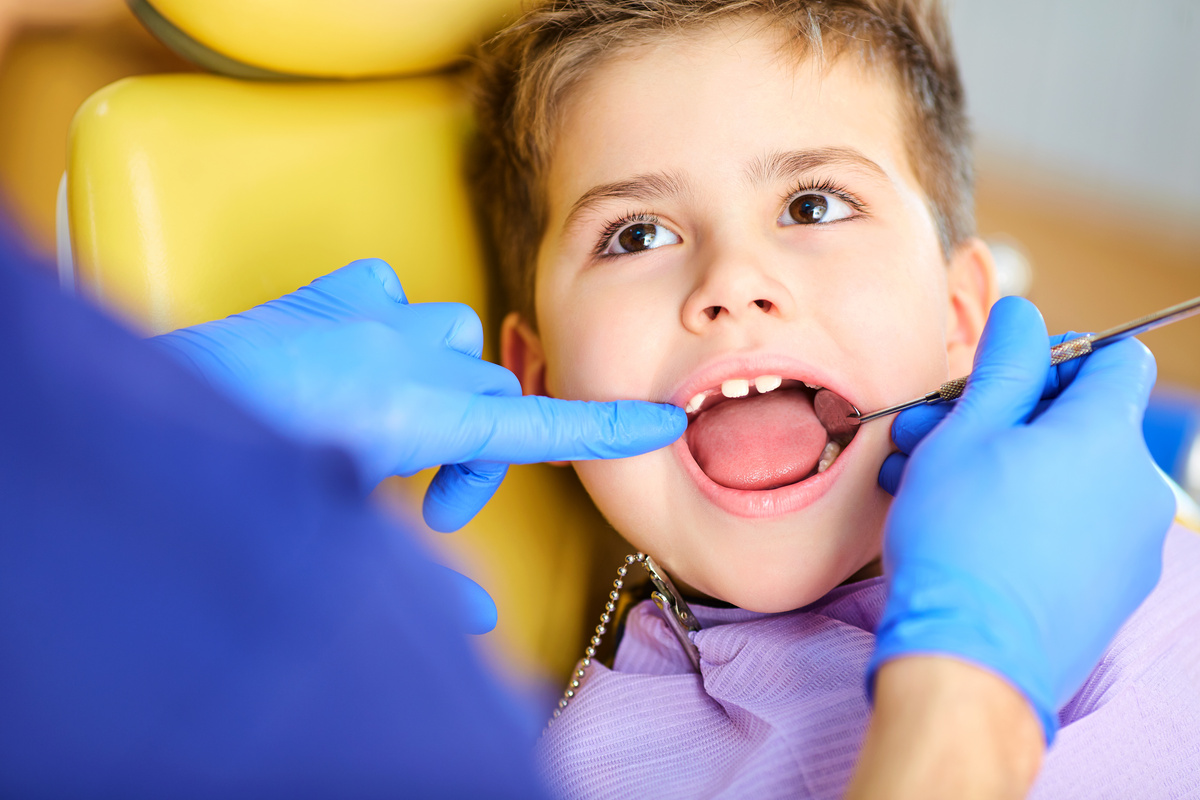
When tooth decay reaches deep into your child’s baby tooth, you might worry about what treatment is necessary and whether it’s worth saving a tooth that will eventually fall out. The good news is that many teeth with deep decay can be preserved through pulp therapy, allowing them to maintain proper spacing and function until they naturally exfoliate.
At Pine Tree Pediatric Dentistry, Drs. Tesha Waggoner and Audrey Mikkelson provide comprehensive types of dental restorations for kids, including pulp therapy for teeth with decay that extends into the pulp. We focus on keeping your child comfortable while preserving their natural teeth whenever possible.
When Pulp Therapy May Be Necessary
Baby teeth have proportionally larger pulp chambers than adult teeth, making the nerve more vulnerable when decay progresses. When a cavity reaches the pulp of a tooth, your child may experience sensitivity, discomfort, or pain. An abscessed tooth occurs when bacteria enter the pulp of a tooth through decay, periodontal disease, or a cracked tooth, causing infection and pus buildup.
Early detection through regular dental checkups is crucial because it allows us to treat decay before it progresses to infection. Some children don’t complain of pain even with advanced decay, which is why consistent preventive visits are so important.
Understanding Pulpotomy Treatment
A pulpotomy is a procedure we perform when decay extends into the pulp of a baby tooth but the tooth is not infected. During this treatment, we remove the affected pulp tissue in the crown portion of the tooth while preserving the healthy pulp in the roots. This approach maintains the tooth’s vitality and allows it to continue functioning properly.
After removing the compromised pulp, we place a medicated material over the remaining healthy tissue to promote healing and prevent further problems. The tooth is then sealed and typically restored with a dental crown to protect it and ensure it can withstand normal chewing forces. Our approach adheres to established protocols for pulp therapy, ensuring the best possible outcomes for your child.
When Tooth Extraction Becomes Necessary
If a baby tooth becomes infected, extraction is often the most appropriate treatment option. Infected teeth do not do as well with pulp therapy because the infection has compromised the tooth’s structure and health. Removing an infected tooth protects your child from pain and prevents the infection from spreading or affecting the developing permanent tooth underneath.
We carefully evaluate each situation to determine whether a tooth can be saved with pulp therapy or needs to be extracted. Factors we consider include the extent of decay, whether infection is present, how close the tooth is to its natural exfoliation time, and the overall health of the tooth structure.
Comfort Options During Treatment
Many children do well with nitrous oxide sedation during pulp therapy procedures. This gentle sedation helps cooperative children feel relaxed and comfortable while allowing them to remain awake and responsive throughout treatment. We evaluate each child’s individual needs and anxiety level to determine the most appropriate comfort option.
Our office provides various comfort measures to create a calming environment. We offer weighted blankets, adjustable lighting, and the ability to watch movies during treatment. Our therapy dog, Meyers, often helps nervous children feel more at ease before and after their appointments.
Recovery and Post-Treatment Care
After pulp therapy, your child may experience some mild sensitivity or discomfort for a few days. We provide detailed post-op instructions to support proper healing.
Most teeth treated with pulpotomy require a crown to protect them from future damage. We offer both stainless steel and tooth-colored crown options, depending on the tooth’s location and your preferences.
The Importance of Parental Support
During treatment, we encourage parents to act as silent observers, allowing our trained team to communicate and interact with your child. This approach often reduces anxiety because children respond better when there aren’t “too many cooks in the kitchen.” For children who benefit from preparation, we offer office tours and social stories that provide a picture walkthrough of what to expect.
We use our puppet friend, Mr. Dragon, to demonstrate proper brushing techniques and help children feel comfortable with dental procedures. These tools, combined with our gentle approach, help create positive dental experiences for children of all ages and abilities.
Preventing Future Decay
The best way to avoid the need for pulp therapy is through consistent preventive care. Teaching children proper brushing and flossing techniques removes bacteria that lead to decay. Regular professional cleanings and examinations allow us to identify and treat small cavities before they progress to the pulp.
Dental sealants provide an extra layer of protection for molars, which are especially prone to decay. These thin protective coatings shield the deep grooves in back teeth where food and bacteria often accumulate.
Trust Your Child’s Dental Health to Our Team
As mothers ourselves, we have designed our practice to be a place children look forward to visiting rather than fear. If your child has a cavity or is experiencing tooth pain, prompt treatment can save their tooth and prevent more extensive procedures.
We welcome families from throughout the Portland area and pride ourselves on making pediatric dentistry accessible and positive. Our team stays current with the latest evidence-based practices recommended by the American Academy of Pediatric Dentistry to provide your child with optimal care. Contact our office today to schedule an evaluation or learn more about how we can help preserve your child’s dental health.