
Finding out that your child has a cavity can feel overwhelming, especially when you’re told that the tooth needs treatment but your child may not yet be ready for a traditional filling.
The good news? A traditional filling isn’t always the only option. Depending on your child’s age, the location and size of the cavity, and your child’s ability to comfortably tolerate dental treatment, your child’s dentist may recommend a minimally invasive option such as silver diamine fluoride (SDF) or a Hall crown.
At Pine Tree – we take your child’s comfort seriously. That’s what we offer weighted blankets, reduced overhead lighting, TV, and Meyers our office dog to help your child’s experience at the dentist go smoothly.
These treatments can help manage tooth decay while taking your child’s individual needs into consideration.
What Is Silver Diamine Fluoride?
Silver diamine fluoride, commonly called SDF, is a professionally applied liquid used to help slow down active tooth decay. Rather than removing the decay with a dental drill and replacing it with a filling, SDF works to stop or slow the progression of the cavity. The American Academy of Pediatric Dentistry recognizes SDF as a minimally invasive approach that may prevent or delay the need for more extensive dental treatment.
SDF can be particularly helpful for children who:
• Are very young or still developing their ability to tolerate dental treatment
• Have dental anxiety or sensory sensitivities
• Have special healthcare needs
• Have multiple cavities that need to be managed over time
• Need more time before they are ready for traditional restorative treatment
One important thing parents should know
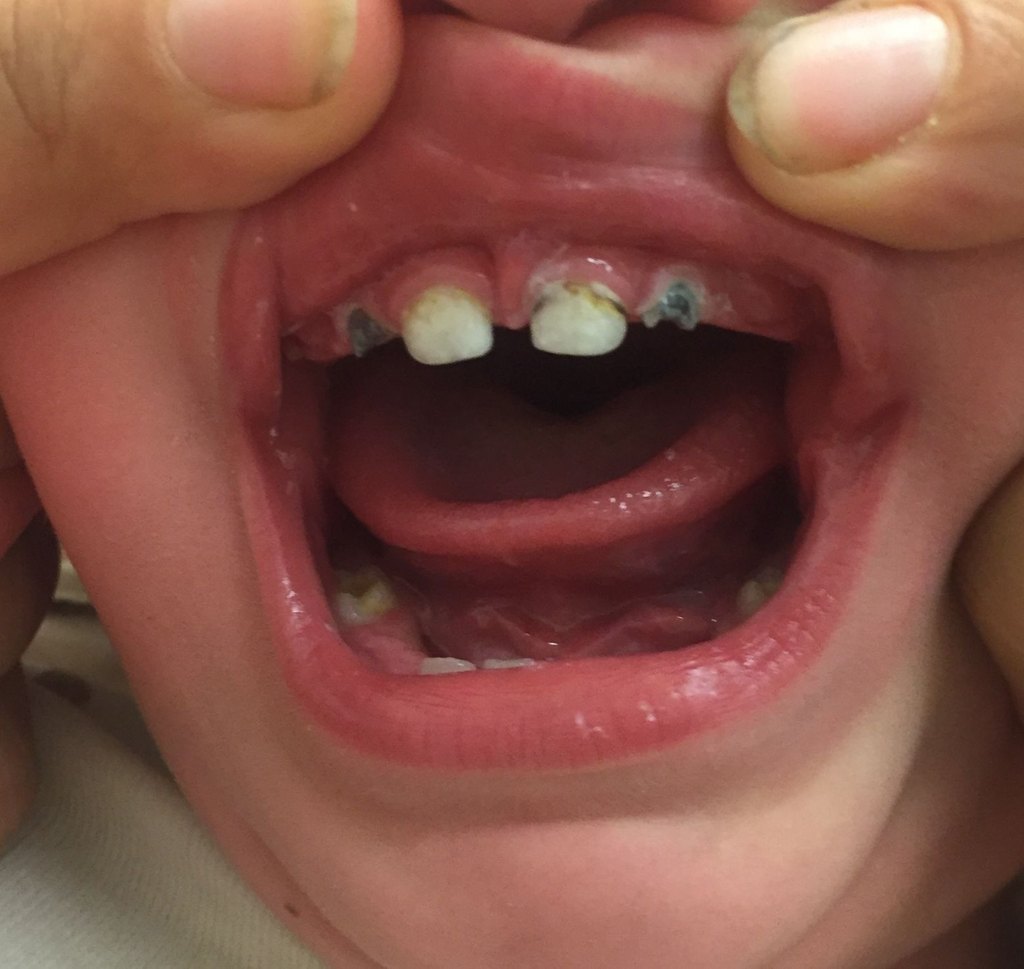
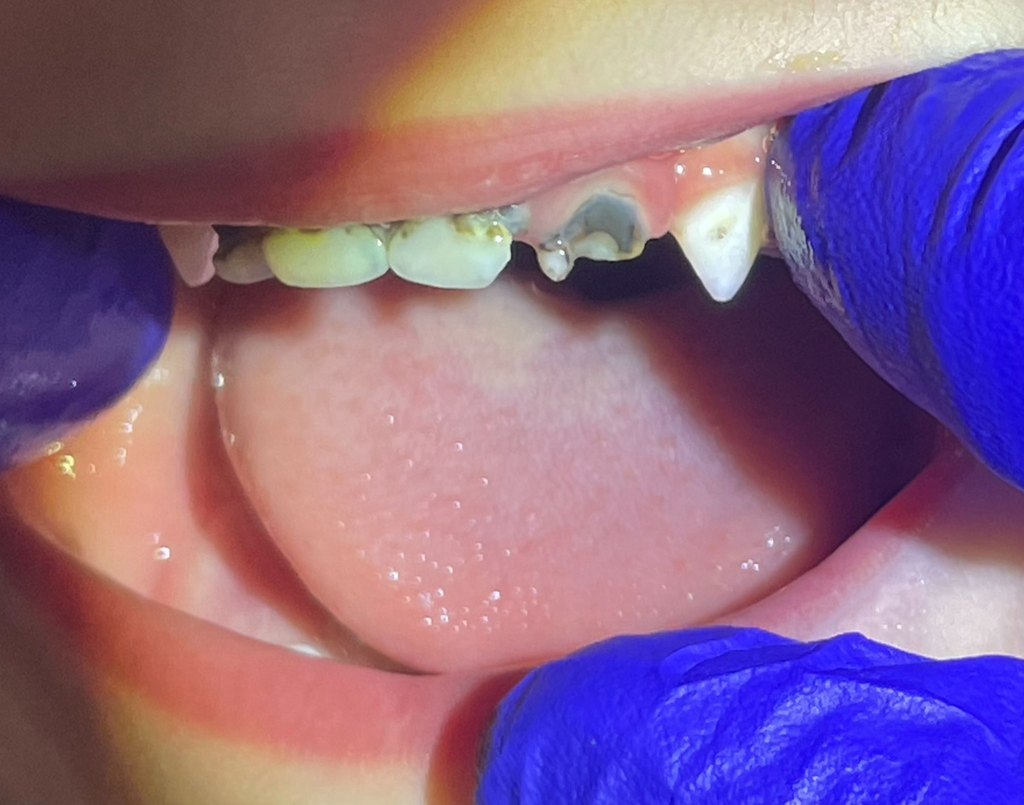
SDF turns the decayed portion of the tooth dark—often black or brown.
This color change is expected and is a sign that the treated area has been affected by the SDF. While this can be a significant cosmetic consideration, especially on front teeth, many families feel that temporarily or permanently darkening a cavity is preferable to a more extensive procedure. SDF also doesn’t mean your child is “done” with dental care. Treated
teeth need to be monitored regularly, and additional treatment may eventually be recommended Once your child is ready for the treatment prescribed by the doctor.
Below are pictures of successful SDF placement.
What Is a Hall Crown?
Another minimally invasive option is the Hall technique, commonly called a Hall crown.
A Hall crown is performed by placing a spacer in between the teeth for a day or to create space for a stainless steel crown to be placed over a decayed primary molar without the traditional removal of the decay with a dental drill. Instead, the crown seals the tooth and isolates the decay depriving it of oxygen, and allowing it to progress.
For some children, this can mean avoiding some of the steps associated with a conventional filling.
The Hall technique is recognized by the AAPD as a minimally invasive approach to managing caries in appropriate pediatric patients. Why might a Hall crown be recommended?
A Hall crown may be considered when:
• A primary molar has significant decay
• A traditional filling may not provide the best long-term result
• Your child has difficulty tolerating a conventional restorative appointment
• Preserving the baby tooth is important
• The tooth is still needed for chewing and maintaining space for the developing permanent tooth
Unlike SDF, a Hall crown covers the tooth, so the cavity is no longer visible.
SDF vs. Hall Crown: What’s the Difference?
While both approaches are minimally invasive, they serve different purposes.
SDF is a liquid treatment that helps arrest active decay. It is especially useful when buying time is important or when a child isn’t currently able to tolerate more involved treatment.
A Hall crown physically seals and protects a decayed primary molar beneath a stainless steel crown. It can be a great option when the tooth needs more substantial protection but a traditional filling may not be the best approach.
Neither treatment is automatically “better.” The right choice depends on the individual tooth and the individual child.
But does Choosing SDF or a Hall Crown Mean My Child Will Never Need a Filling?
Not necessarily.
Pediatric dentistry is about more than treating a tooth, it’s about treating the whole child. As a board-certified pediatric dentist, Dr. Tesha Waggoner knows that sometimes the goal is to control the decay while giving your child time to become more comfortable and confident in the dental setting. A minimally invasive treatment may delay or eliminate the need for more extensive treatment on that particular tooth, but your child’s dentist will continue monitoring the tooth and their overall oral health.
It’s also important to remember that treating a cavity doesn’t eliminate the underlying risk for developing cavities. Brushing twice a day with fluoride toothpaste, cleaning between the teeth, making thoughtful dietary choices, and keeping regular dental appointments are all important parts of preventing new decay.
There Isn’t One “Right” Way to Treat Every Child
Every child is different.
A treatment that works beautifully for one child may not be appropriate for another. Your pediatric dentist will consider factors such as the tooth’s condition, your child’s age and development, their behavior and comfort level, cavity risk, and how long the tooth is expected to remain in the mouth.
The goal isn’t simply to “fix a cavity.” The goal is to protect your child’s oral health while creating a positive dental experience that sets them up for a lifetime of healthy smiles.
If your child has been diagnosed with a cavity and you’re unsure about the treatment options, don’t be afraid to ask questions.
• Is this tooth a good candidate for SDF?
• Would a Hall crown be appropriate?
• Does this tooth still need a traditional restoration?
• What are the benefits and limitations of each option?
• How will we monitor the tooth afterward?
• What can we do at home to reduce the risk of additional cavities?
Sometimes, the best treatment isn’t the most traditional one—it’s the one that safely meets your child where they are today. If you are looking for non-traditional ways to treat your child’s cavities – we can provide a comprehensive evaluation at our Portland or Lake Oswego location. Call (503)292-9274 or request an appointment online.